6 June 2026
Why Every Construction Project in NSW Needs a Traffic Control Plan Before Work Begins
In the fast-paced world of New South Wales construction, the blueprint for a building is only half the battle. Before a single excavator starts its engine or a lane is closed for utility works, there is a legal and safety framework that must be established to manage the flow of people and vehicles. At the heart of this framework is the Traffic Control Plan.
Whether you are managing a major infrastructure project in Sydney or a residential renovation in regional NSW, understanding your obligations regarding road safety is critical. Navigating the complexities of local council regulations and Transport for NSW requirements can be daunting, but skipping these steps can lead to significant legal, financial, and safety repercussions.
What is a Traffic Control Plan (TCP)?
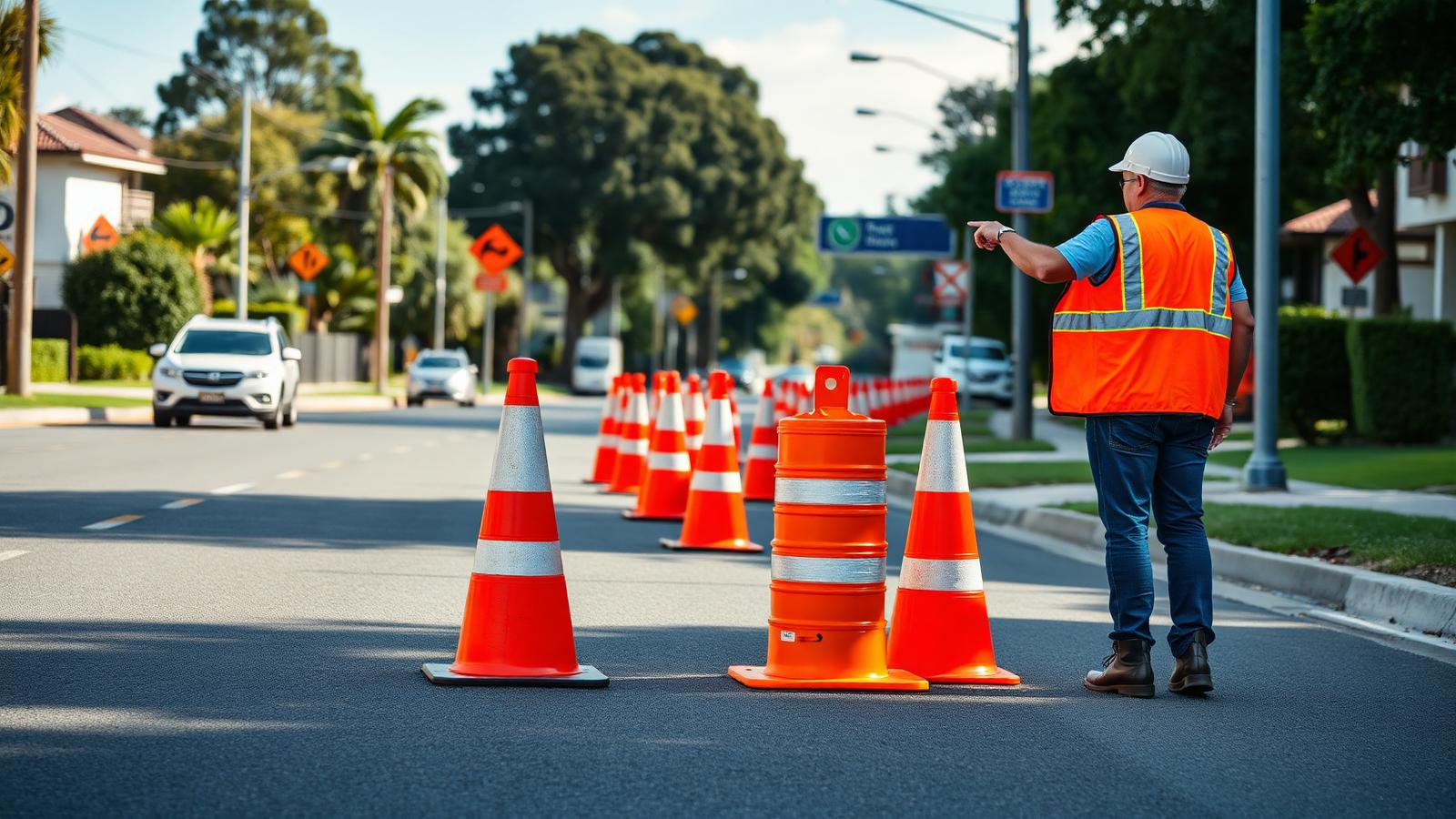
A Traffic Control Plan (TCP) is a high-level technical diagram that illustrates exactly how traffic will be managed around a worksite. It is a strategic map that dictates the placement of warning signs, barricades, cones, and traffic controllers to ensure that the public and workers remain safe while work is being performed on or near a roadway.
It is important to note that a TCP is specific to a location and a set of circumstances. It details how vehicles, cyclists, and pedestrians will be diverted or slowed, and ensures that the work area is clearly defined. In NSW, these plans must be designed by qualified professionals who hold the appropriate certification, ensuring that the plan adheres to the Australian Standards (AS 1742.3) and the Transport for NSW Traffic Control at Work Sites manual.
Why TCPs are Legally Required for Construction and Roadwork Projects in NSW
In New South Wales, the law is clear: any activity that interferes with the normal flow of traffic—be it on a suburban street or a major highway—requires an approved Traffic Control Plan. This requirement is governed by various pieces of legislation, including the Work Health and Safety Act 2011 and the Roads Act 1993.
WorkCover (SafeWork NSW) and local government authorities mandate these plans to fulfil a "Duty of Care." Without a documented plan, a construction site is considered non-compliant. Authorities have the power to shut down sites immediately if they deem the traffic management insufficient or undocumented. In short, a TCP is not just a "good idea"—it is a legal prerequisite for starting work.
Safety Benefits for Workers, Pedestrians, and Motorists
The primary objective of a Traffic Control Plan is the preservation of life. Construction sites are inherently dangerous, particularly when they interface with moving traffic.
- For Workers: A TCP creates a "buffer zone," providing a physical and visual barrier between labourers and high-speed vehicles.
- For Pedestrians: Plans ensure that footpaths remain accessible or that safe, signposted detours are provided, particularly for those with mobility aids or prams.
- For Motorists: Clear signage and predictable lane changes reduce the risk of "rear-end" collisions and confusion, which are common in poorly marked construction zones.
By implementing a professional plan, you eliminate guesswork and create a controlled environment where everyone knows exactly where they should be.
Common Projects That Require a Traffic Control Plan
Many project managers are surprised to learn that even minor works require formal documentation. If your work spills over onto a nature strip, footpath, or roadway, you will likely need a Traffic Control Plan. Common examples include:
- Utility Works: Trenching for water, gas, or telecommunications (NBN).
- Hoisting and Lifting: Using a crane that swings over a public roadway or footpath.
- Concrete Pours: When concrete pump trucks or agitators need to park in a live lane.
- Scaffolding: Erecting or dismantling scaffolding adjacent to a public thoroughfare.
- Road Maintenance: Re-surfacing, line marking, or pothole repairs.
- Event Management: Festivals or community events that require temporary road closures.
The Role of Traffic Guidance Schemes (TGS)
While people often use the term Traffic Control Plan as a catch-all, the industry is increasingly using the term Traffic Guidance Scheme (TGS) to describe the specific technical layout. A TGS is the detailed component of the plan that shows the exact arrangement of temporary traffic control devices.
At Traffic Control Plans Australia, we specialise in creating TGS documents that are precise and easy to interpret. These schemes are essential for the "boots on the ground," giving the traffic controllers a clear set of instructions to follow. A well-designed TGS ensures that your site is compliant with the latest NSW state regulations and standards.
Council Permit Approvals and Road Occupancy Licences
Having a Traffic Control Plan is often only the first step. To legally occupy the road, you usually need permission from the relevant authority.
- Council Permit Approvals: If your project is on a local road, you must apply for a permit from the local council. They will review your TCP to ensure it doesn't unfairly impact local residents or businesses.
- Road Occupancy Licence (ROL): For projects on state-managed main roads, a Road Occupancy Licence is required from Transport for NSW. This is a more rigorous process that considers traffic volume, peak hour restrictions, and regional impact.
We assist our clients by designing the plans required to secure these approvals, ensuring the technical documentation meets the high standards required by council engineers and government assessors.
Risks of Operating Without an Approved TCP
Operating without a Traffic Control Plan is a gamble that rarely pays off. The consequences can be catastrophic for a business:
- Hefty Fines: Heavy penalties from SafeWork NSW or local councils can wipe out the profit margin of a project.
- Legal Liability: If an accident occurs and you do not have an approved TCP, your insurance policy may be voided, leaving you personally or corporately liable for millions in damages.
- Work Stoppages: Authorised officers can issue "Stop Work" notices, causing project delays that lead to liquidated damages.
- Reputational Damage: Consistently failing to meet safety standards can lead to a loss of future government or commercial contracts.
How Professional TCP Designers Help Ensure Compliance
Drafting a Traffic Control Plan is not something that should be done on a napkin or using generic templates. NSW roads are complex, and "one size fits all" solutions do not work.
Professional designers, like the team at Traffic Control Plans Australia, understand the nuances of the NSW Speed Zone guidelines and the specific requirements for different road types. We use specialised software to create high-resolution, accurate plans that are more likely to be approved quickly by councils. By outsourcing your design, you ensure that your documentation is up-to-date with the latest legislative changes, saving you the headache of repeated revisions. Find out more about our Traffic Control Plan design and documentation service.
Steps Involved in Obtaining a Traffic Control Plan
Obtaining a Traffic Control Plan through our professional service is a streamlined process:
- Initial Consultation: We discuss the scope of your construction project, the location, and the expected duration of the work.
- Site Assessment: We review the site using high-definition satellite imagery and site-specific data to identify potential hazards.
- Plan Drafting: Our qualified designers create the TCP/TGS in accordance with AS 1742.3 and NSW standards.
- Review and Revision: You review the plan to ensure it meets your operational needs.
- Submission: The plan is then used to support your application for a Council Permit Approval or a Road Occupancy Licence.
Why Businesses Choose TrafficControlPlan.com.au
At Traffic Control Plans Australia, we focus exclusively on the planning and compliance stage of Construction Traffic Control. Because we do not provide labour or equipment hire, our focus is entirely on providing the highest quality technical designs and consultancy.
We pride ourselves on our rapid turnaround times and our deep knowledge of NSW-specific regulations. Our goal is to take the paperwork off your desk so you can focus on the construction work at hand. Whether you are an individual builder or a large-scale developer, we provide the professional foundation required to get your project moving safely and legally.
FAQs
Q: Do I need a TCP if I am only blocking the footpath? A: Yes. Footpaths are considered part of the road reserve. If you are obstructing pedestrian access, you must have a Traffic Control Plan to manage pedestrian safety and provide alternative routes.
Q: How long does it take to get a Traffic Control Plan designed? A: While simple plans can often be produced quickly, we recommend allowing several days for the design and review process. Remember that the subsequent Council or ROL approval can take anywhere from 2 to 10 business days.
Q: Can I use the same TCP for multiple locations? A: Generally, no. Every site has unique variables—bus stops, intersections, speed limits, and sightlines. A Traffic Control Plan must be site-specific to be legally valid.
Q: What is the difference between a TCP and a TMP? A: In our industry, we use the term Traffic Control Plan (TCP) to refer to the specific diagram for a worksite. A Traffic Management Plan (TMP) is a much broader document that covers the overall impact of a large-scale project on the entire road network.
Q: Does Traffic Control Plans Australia provide the traffic controllers? A: No. We specialise exclusively in the design, drafting, and permit consultancy. We provide the "paperwork" you need to legally start work, but we do not provide on-site staff or bollard hire.
Ensure your project is compliant from day one. Contact Traffic Control Plans Australia today to discuss your site requirements and secure your professional Traffic Control Plan. You can also enquire now and send us your project details. Our expert team is ready to help you navigate council permits and road occupancy licences with ease.
Request a free quote today: Phone: +61 450 509 215 Email: office@trafficcontrolplan.com.au Web: www.trafficcontrolplan.com.au